How the system works
Separating business and personal cash flow, step by step.
Salary Wizard separates business and personal cash flow.
Step 01
Revenue
Start with business sales and incoming cash.
Step 02
Business needs
Secure fixed costs, variable expenses, and planned expenses first.
Step 03
Owner salary
Allocate the amount the owner can actually use for living costs.
Step 04
Rainy-day fund
Keep remaining surplus and tax reserves protected.
Step 05
AI insights
Check salary stability, future expenses, and next-step checklist.
Takeaways
Research changed the direction of this project.
Our initial problem framing was logical, but interviews revealed a more immediate barrier: owners were busy, short on time, and unwilling to take on more financial work. Through rapid prototyping and user testing,
I learned that Salary Wizard’s value was not providing more information, but reducing the effort required to interpret it.
Working within a tight competition timeline also meant making decisions quickly while adapting to changing insights. Balancing time pressure, iteration, and the stress of the competition taught me to prioritize what mattered most and keep moving forward without losing sight of the user.

Appendix · Character system
Lupin appears when users need explanation.
Lupin appears in onboarding, connection states, and guidance to turn abstract financial states into recognizable cues. Simple expressions keep the experience approachable without weakening fintech credibility.
Lupin began as a simple hand-drawn sketch exploring how financial states could feel more human and approachable. Based on these early sketches, AI helped refine the character's form and keep it visually consistent.
How Lupin took shape








Instead of asking users to interpret financial categories themselves,
we translated business cash flow into two familiar concepts.
Money I can spend
= Salary
The amount the owner can use for personal living expenses after business needs are secured.
Money I should keep
= Rainy-day fund
Surplus kept for uncertainty, future expenses, taxes, and financial stability.
Core Idea


Interviewed sales professionals who regularly interact with small-business owners and have met more than 300 of them.
Experienced owners
Lacked time.
They knew money management mattered, but constant tracking became another task on top of running the business.
Owners in their first three years of business
Lacked a standard.
They lacked experience deciding what to keep in the business, spend personally, or reserve for future costs.

Research
The problem wasn’t simply unpredictable cash flow.
Survey
n=10 · 16 questions
5–10 min
In-person
n=5 ·17 prompts
50–60 min
Links : Survey result, Interview 1, Interview 2







They didn't need more financial information.
They needed less financial work.
Two different behaviors,
one shared need: reduce the effort of
deciding what is safe to spend.
BEFORE
Learn about the user first
AFTER
Help the user understand the product first
Financial tendency
Spending behavior
Multiple questions before entering the product
Understand your cash flow
Separate salary and rainy-day fund
See what needs attention next
Show the service's value before asking users to do more financial work.

We removed the financial-profile survey.
A major design change
We thought unpredictable income and a cycle of unstable cash flow were the core problem.
Difficult Cash flow Management
Financial Uncertainty
Out of business
Irregular Income


Our initial concept aimed to help business owners better understand their financial habits and make more informed decisions.
We thought they needed a better way to manage their money and more personalization seemed like the answer.

Initial Hypothesis
In Korea, many small businesses do not survive long enough to build financial stability.
Behind these numbers are small business owners juggling sales, expenses, taxes, future costs, and personal living needs—often without a clear separation between business and personal finances.
Source : Korean National tax service
60%
46%
22%
Business closure rate
within 1 year
Business closure rate
within 3 years
Business closure rate
within 5 years
Overview
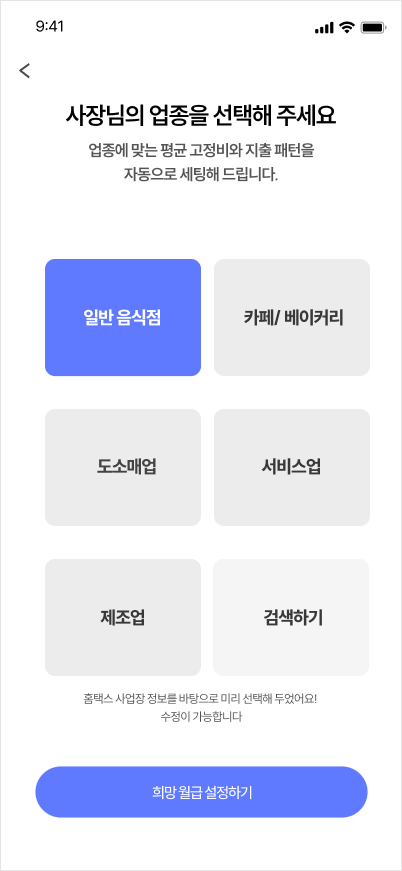
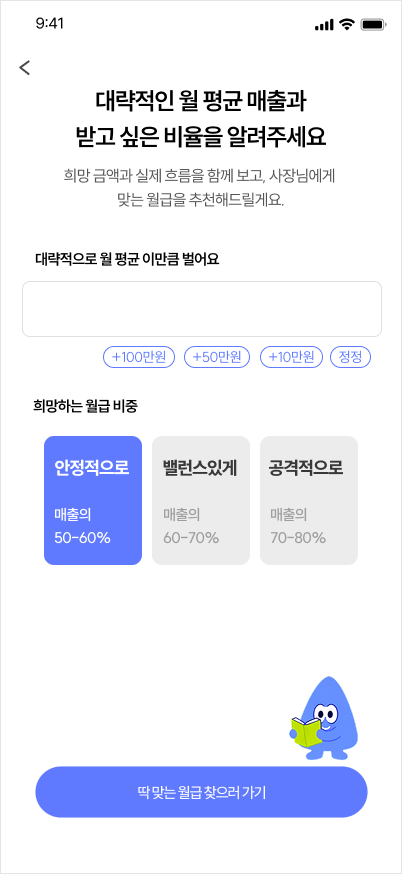
Industry, revenue, and salary goals set the initial target before real data was available.
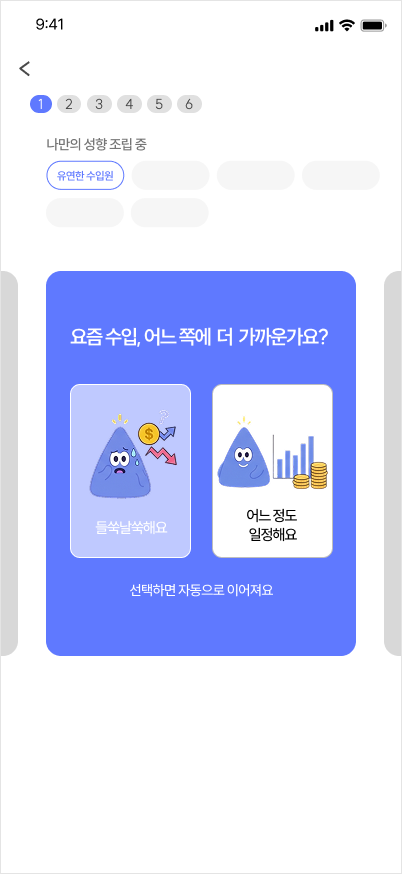
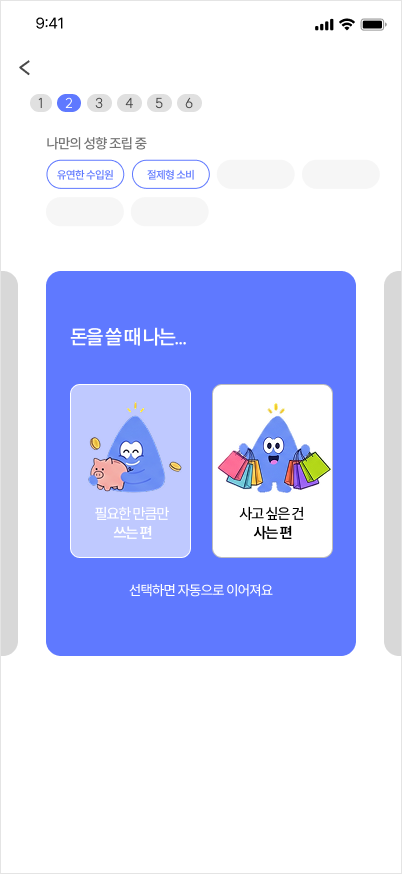
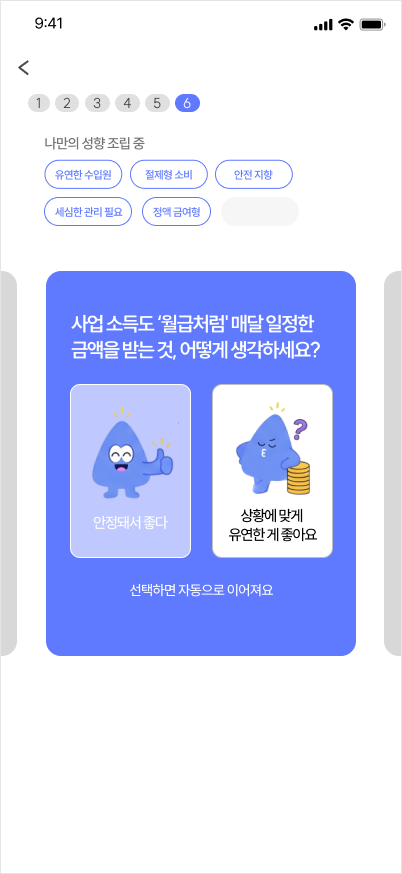
Based on the survey, the service showed each owner’s money management style through visual character types.
After connecting account data, the service suggested
a safer salary range based on actual cash flow.
A short survey captured money habits and risk preferences to estimate financial behavior.






The original onboarding asked about spending and investment preferences so the service could tailor financial guidance from the beginning.
Initial Concept
1
2
3
4
Different characters based on
each user’s financial profile
Integrate personal
credit data via API


This put effort before value: users had to complete a financial-habits survey before seeing what the product could do, creating a risk of drop-off during onboarding.



...
Survey for business owners


Related News
Won an award in a financial AI competition hosted by the Korea Fintech Industry Association
Team : 5 membersRole : Product Planning · UX/UI Design
Time + experience gap
Experienced owners lacked time; newer owners lacked a safe spending benchmark.
Mixed cash flows
Business and personal expenses blurred what was actually safe to spend.
A personal spending benchmark
Owners already had a rough sense of what they needed to live on each month.
Key insights
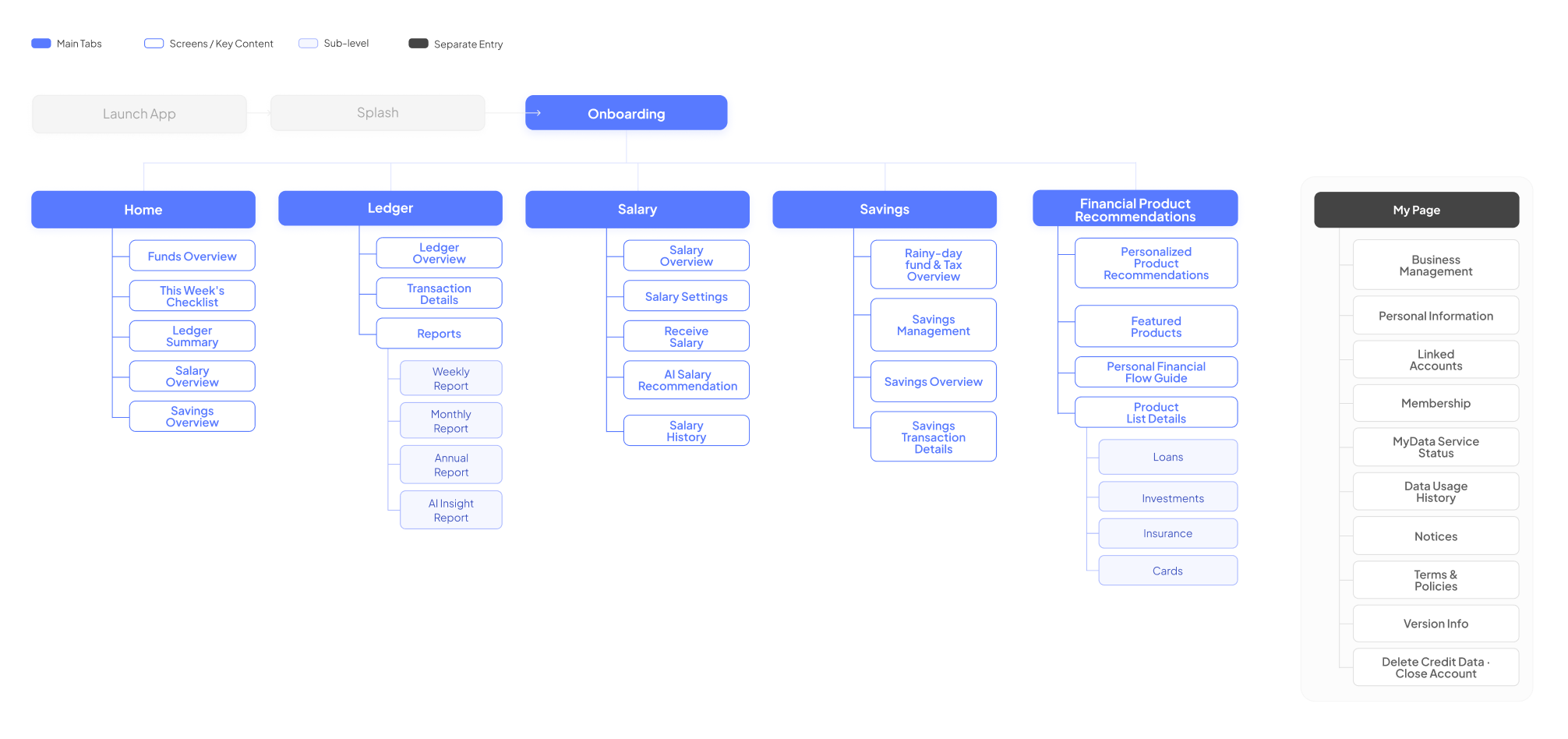
Once the financial model was defined, we translated it into IA so each recurring decision had a clear place in the product.
Full IA
Information Architecture

Our hypothesis focused on cash-flow volatility.
Research showed that the real barrier was the effort it took to understand financial information and act on it.
BEFORE
AFTER
How might we help owners quickly know what they can spend and what they should keep?

How might we help small-business owners better manage irregular income?

Turning point

Salary Wizard separates business and personal cash flow
to give small business owners a clearer answer.
Turning unpredictable business income
into a salary you can actually use.
UX Research
User Interface
UX Ideation
UX Prototype
UX Concept Design
2026 Award competition
by the Korea Fintech Industry Association


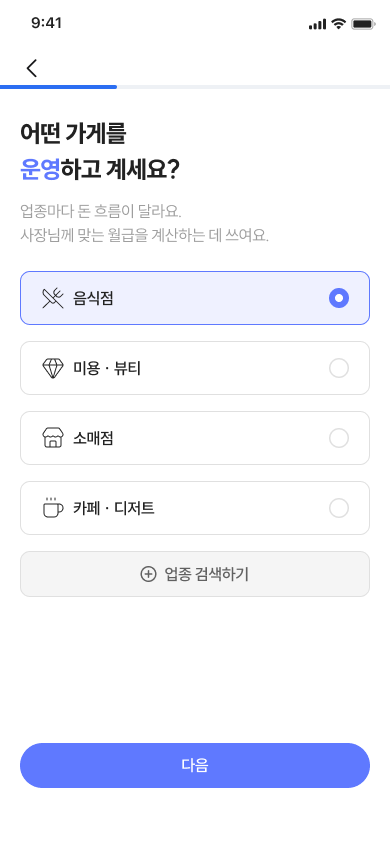
Users first set their desired salary, then see the revenue needed to support it before connecting their financial accounts.

Prioritize key status and decision criteria.
Protected by purpose
Emergency and tax reserves are kept separate from spendable cash, making it clear what should stay untouched.

1
Set a clear monthly salary
Define how much to pay yourself each month, creating a clear boundary between business funds and personal spending.
1
Check if the salary is sustainable
A stability score shows how reliably the current salary can be maintained based on cash flow.
2
Set a practical safety buffer
A three-month reserve target helps users understand how much cash they need to stay financially prepared.
2
3
Make reserve progress easy to track
Users can see how much they’ve saved, how consistently they’re contributing, and where each contribution came from.
4
Explain what gets automated
Once connected, automate salary planning, future-expense prep, and reports while keeping the owner in control.
3
Ask for sign-up + connections
Ask for sign-up and account access only after showing a useful calculation—value before work.
1
Start with the salary goal
Start with the owner’s desired monthly take-home amount—a clearer goal.
1
2
Translate goal into business reality
Use industry, revenue, and expense context to estimate what the business must earn to support that salary.








Checklist for business owners
Be ready for
low-revenue months!

Salary Wizard handles it for you
How much would you like to
pay yourself each month?

2
3
4
2
3
Home
Savings for rainy-day
Setting monthly Salary
Salary amount and stability are placed at the top, so users can understand their current financial position before reviewing detailed information.
1

2
2
From exploring financial preferencesto setting up real money management

1
Report - Ai report
1
2
Before
After
Problem
Irregular income and cash flow
are difficult to manage
Money management feels like extra work;
users lack time or a clear standard
Product role
Help users manage money
Define what they can spend and
what they should keep
Core concept
Financial management
Salary + Rainy-day fund
Onboarding
Learn about the user
Explain the value first
Information
Show financial data
Interpret financial boundaries
Key changes


The product changed when the problem changed.
See financial patterns over time
Weekly, monthly, and yearly views help users track changes at different timeframes.
1
Turn financial data into a clear review
Key figures are compared in one place to show what was available, what was safe to pay, and what was actually paid.
2
2
Place key alerts second
After showing the current financial status first, key alerts are presented next to highlight what needs attention.
4
Understand Cash Flow at a Glance
Pair profit with revenue and expenses, then explain what changed in plain language.
5
Rainy-Day Fund Scenarios
Instead of simply warning users when their salary cannot be paid, provide a clear path.

1
Cash Flow Alert
Place salary amount and stability at the top so users can understand their current financial position first.
1
2
3
4
5
3
Turn Insights into Action
A weekly checklist connects users with the financial tasks they need to review and manage.

**When Survival Mode is activated, warnings also appear alongside important upcoming dates.

